


The New TYPO3 Backend: Innovation Meets Architecture
The new TYPO3 backend marks a significant step forward for enterprise content management systems. By recombining existing components intelligently, the team has built a working prototype that proves the technical maturity of TYPO3 13 and sets new standards for flexibility and extensibility.
Table of Contents
Prototype
Proof of Concept, Design Overview
TYPO3 Context
Enterprise CMS, Market Position
Efficiency & Design
Reduced Complexity, Customisability
Multilingualism
Translation Management, Metadata, SEO
Technical Architecture
Separation of Concerns, Modular Components
Outlook
Evolution, Future Viability
Conclusion
Statement, Technical Maturity
Prototype as a Proof of Concept
At the heart of this work is a carefully considered architecture: rather than reinventing proven backend components, the team orchestrates them intelligently. The result is a coherent system that turns modular design into something genuinely usable. This approach reduces technical debt and lays a solid foundation for future extensions.
The prototype's real strength is its adaptability. Development teams can build on it and tailor the backend to specific project requirements without reimplementing the underlying structures. This flexibility shortens development cycles and allows for focused customisation.

The new TYPO3 backend has a considered, modern design: the dark interface reduces eye strain during long working sessions, while the clearly structured navigation makes the system intuitive to use. The page tree on the left gives direct access to all content, and the main area presents a well-organised content management view with flexible layout options. The clean separation between navigation, content editing, and layout configuration reflects the careful component architecture behind the backend refresh.
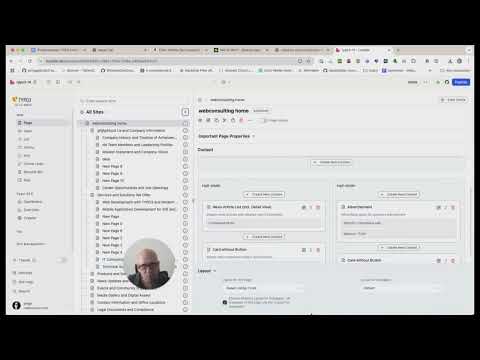
Click loads YouTube (Privacy)
TYPO3 in the Content Management Context
TYPO3 has established itself as a reliable enterprise CMS built for complex requirements. The backend refresh reinforces that ambition: modernity without breaking with proven principles. The latest version combines the stability of a mature system with the demands of contemporary web development.
Efficiency through Considered Design
For teams that run and extend content management systems, the working prototype offers tangible benefits:
Reduced complexity: The clear component structure simplifies maintenance and debugging. Developers can find their way around more quickly, which speeds up onboarding and reduces the scope for errors.

The redesigned interface for page properties is much clearer: metadata, translations, and categories are well structured and easy to reach. The multilingual interface helps teams manage international content, and the clear split between properties and content makes day-to-day work more efficient.
Greater customisability: The modular architecture allows targeted changes without side effects. Custom implementations slot neatly into the existing structure.
A future-proof foundation: The prototype is not a finished, static product but an evolutionary base. It invites users to try out new features and explore fresh workflows, all on top of a stable foundation.
Multilingualism and Metadata Management
The backend refresh is built with international projects and complex content structures in mind:

The modernised translation management uses tag-based language selection (German, English, Chinese), making multilingual websites easier to manage. Content managers can switch between languages without leaving the navigation, and the consistent interface works equally well across all of them.

The improved metadata management allows content to be categorised in fine detail. The combination of translation tags, content categories (Teachers, Children, Parents, Business, Education), and detailed metadata creates a solid basis for SEO and content discovery. A built-in notes feature supports collaborative workflows.
Technical Architecture
The new backend's component architecture follows established patterns of modern software development and offers concrete benefits:
- Separation of Concerns: Clear separation of presentation, logic, and data access
- Reusability: Components can be used in various contexts
- Testability: Modular structure facilitates unit and integration testing
- Performance: Optimised loading times through intelligent asset management

This is where the modular architecture shows its worth in practice: areas can be arranged into half-width or full-width layouts, and ready-made components such as "News Article List" and "Advertisement" are added by drag-and-drop. The modular approach speeds up content creation and keeps the design consistent.

Layout management highlights the flexibility of the new architecture: separate layouts can be configured for the main page and its subpages, and the "Choose different Layout for Subpages" option gives fine-grained control over page structure. This supports complex website architectures without sacrificing usability.
These architectural decisions help development teams work more efficiently and produce maintainable, scalable code.
Outlook: Evolution Instead of Revolution
The TYPO3 backend refresh takes a pragmatic approach to modernisation: evolving proven principles rather than reinventing them wholesale. This path respects existing investments in TYPO3 infrastructure while paving the way for modern development practices.
For developers and decision-makers alike, the prototype signals that TYPO3 is actively building on its ambition as a future-proof enterprise CMS. The community is invited to help shape that direction, with a system that is both stable and innovative.
Conclusion
The working prototype of the TYPO3 backend refresh is more than a technical update; it is a statement about where the project is headed. The intelligent use of existing components demonstrates technical maturity, while the architecture opens up new possibilities.
TYPO3 stays relevant as a result: an enterprise CMS that pairs stability with the drive to innovate, giving development teams the tools to build modern, high-performance web solutions.